
A spare bedroom becomes an office. The furniture moves around in the lounge. A kitchen gains another appliance. It doesn’t take much before the sockets that once seemed perfectly adequate are all in the wrong places.
Adding another socket can be a straightforward job, but it still needs a little thought. The important bit isn’t just cutting a hole and fitting a new outlet. The existing circuit, protection and intended use all need checking first.
Start with what the sockets will be used for
A desk with a laptop, monitor and phone charger is quite different from a utility area containing a tumble dryer or portable heater.
Before planning the work, it helps to know:
- What equipment will normally be connected
- Whether several higher-powered appliances may run together
- Where furniture and fixed appliances will sit
- Whether the room is likely to change use again
Extra outlets make a room more convenient, but they don’t automatically increase the capacity of the circuit supplying them. That is why the likely electrical load matters, especially in kitchens, utility rooms and home offices.
Electrical Safety First also advises against relying heavily on extension leads and adaptors. Extension leads have a stated maximum rating and shouldn’t be connected to one another. Electrical Safety First guidance on overloading sockets
The existing circuit needs checking
The electrician needs to establish which circuit supplies the proposed position and whether it is suitable to extend.
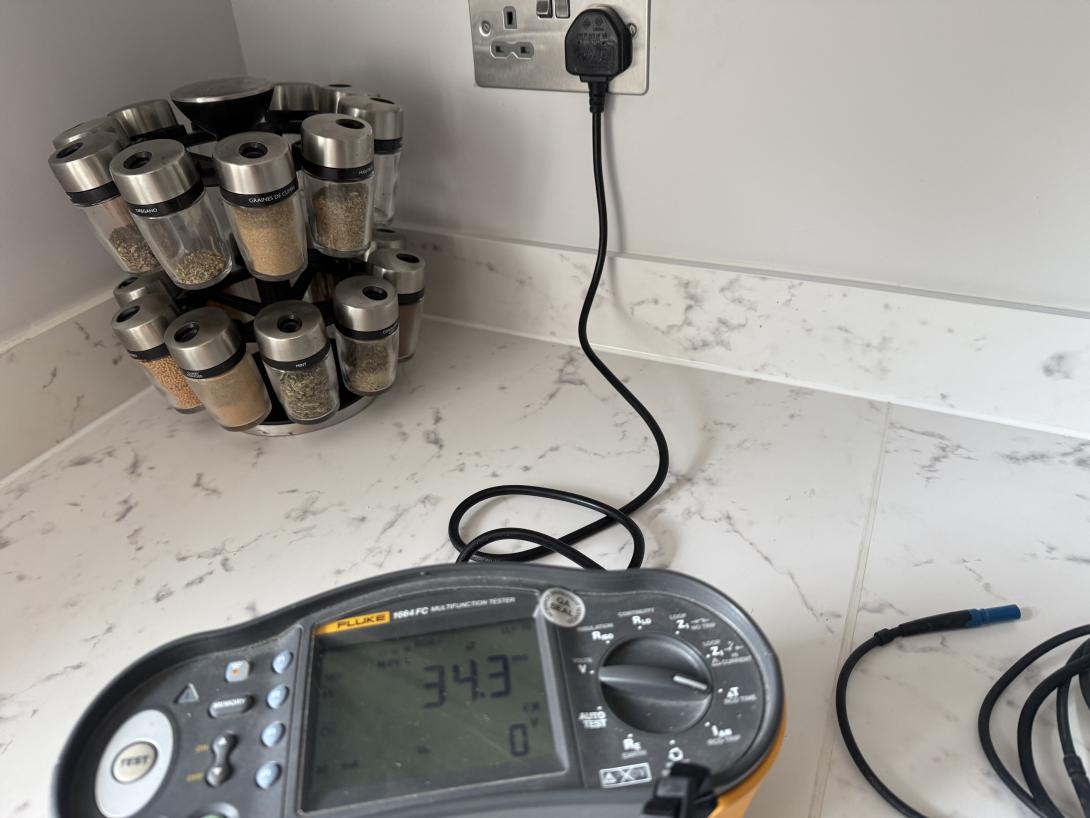
That normally means looking at the consumer unit, identifying the circuit arrangement and carrying out appropriate testing. The condition of the existing wiring, earthing and protective devices all affect what can sensibly be done.
Replacing a single socket with a double may be possible, but it isn’t an automatic decision in every property. The circuit type, loading and cable rating still need assessing. Electrical Safety First guidance on extension leads and adaptors
Older wiring doesn’t necessarily mean the whole property needs rewiring. Equally, a modern-looking socket doesn’t prove that everything behind it is sound. Testing provides the information needed to make that decision properly.
RCD protection matters
RCD protection is designed to reduce the risk of electric shock when certain electrical faults occur.
When an existing circuit is being altered, its protection needs to be checked against the work being proposed. If suitable protection isn’t already present, the electrician will explain the practical options rather than simply connecting a new socket and ignoring it.
Every job is slightly different. The answer might be a straightforward circuit alteration, an additional protective device or, where the proposed load requires it, a new circuit.
Position and cable route come next
Socket position affects both how useful the finished job will be and how the cable can reach it.
It is worth thinking about beds, wardrobes, desks and television units before the work begins. A socket hidden behind heavy furniture isn’t much help, while a low socket directly behind an appliance may make the plug difficult to reach.
The cable route also affects the finish. Depending on the construction of the room, the options may include:
- Concealed wiring with local making good
- Neat surface-mounted trunking
- Access from below a suspended floor
- Access from above where the floor or loft arrangement allows it
I’d rather agree the route before work starts than leave somebody surprised by where a cable or section of trunking has ended up.
Kitchens and utility rooms need more planning
Sockets in a kitchen aren’t all doing the same job. A worktop socket for a kettle has different requirements from a connection for an oven, dishwasher or induction hob.
Adding more outlets also doesn’t turn an existing circuit into a suitable supply for every new appliance. Sometimes the existing circuit can be altered safely. Sometimes a dedicated circuit is the more appropriate answer.
This is why kitchen electrical work is best planned alongside the appliance layout, rather than after the units and worktops have already been fitted.
The work should be tested afterwards
Once the socket work is complete, the affected circuit should be inspected and tested. The paperwork depends on the scope of the job. An alteration to an existing circuit may be covered by a Minor Electrical Installation Works Certificate, while a new circuit requires an Electrical Installation Certificate.
NAPIT’s homeowner guidance confirms that the appropriate BS 7671 certificate should be provided after electrical installation work. NAPIT homeowner guidance
Not every additional socket needs separate Building Control notification in England, but all electrical work must still meet the applicable safety requirements. New circuits and work in particular locations can have additional notification requirements. Approved Document P
Warning signs around existing sockets
A damaged or overheating socket should be looked at before more outlets are added to the same circuit.
Stop using the affected socket and arrange an inspection if you notice:
- Scorching or discolouration
- A burning or hot-plastic smell
- Buzzing or crackling
- A plug or socket becoming unusually hot
- Repeated fuse or circuit-breaker operation
Don’t remove the socket face or try tightening the wiring yourself.
FAQs
Can a single socket be changed to a double?
Often it can, but the existing wiring, box, circuit arrangement and intended load should be checked first.
Does adding sockets mean I need a new consumer unit?
Not automatically. The electrician will check the condition and protection of the existing circuit. A consumer-unit change should only be recommended where the evidence supports it.
Will the walls need chasing?
That depends on the property and the finish you want. Concealed wiring may require local making good. Surface trunking can sometimes provide a tidy option with less disruption.
Do I need a full EICR before adding a socket?
Not for every socket job. The electrician still needs to carry out the inspection and testing relevant to the proposed work. A wider inspection may be recommended if there are signs of problems elsewhere.
Can I keep using extension leads instead?
A correctly rated extension lead can be useful temporarily, but it shouldn’t be overloaded or connected to another extension lead. If extension leads have become a permanent feature, properly positioned wall sockets may be the better solution.
If you’re planning extra sockets or other small domestic electrical work in Norwich, Norfolk Current can assess the existing circuit and explain the sensible options before work begins.
