
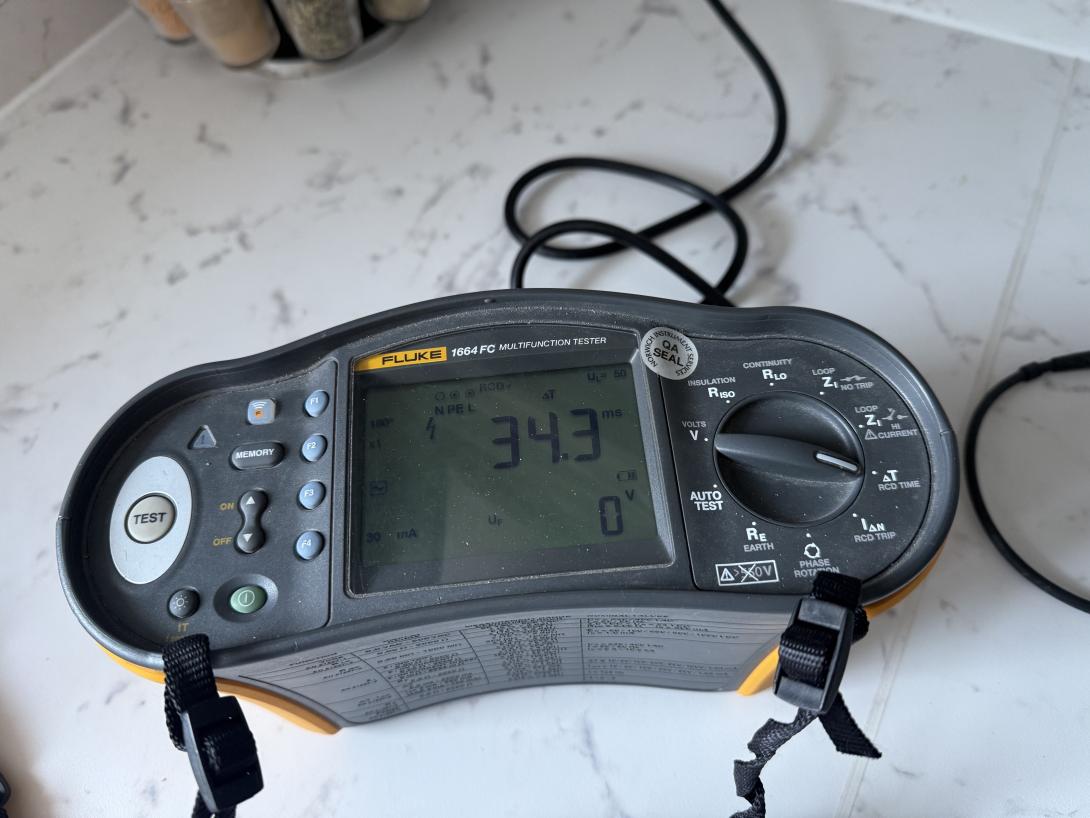
Electrical faults are much easier to find when they happen while the electrician is standing there.
The awkward ones are the faults that appear every few days, only happen when it rains or disappear as soon as somebody comes to look at them. That doesn’t mean there isn’t a problem. It usually means the cause only appears under certain conditions.
A little information from the homeowner can save a lot of guesswork.
Make a note of exactly what happens
“Something tripped” is a useful starting point, but a few more details can make a big difference.
If it’s safe to look, note which switch has moved at the consumer unit. A clear photograph is useful because people don’t always remember whether it was an RCD, RCBO or main switch once the power is back on.
It also helps to record:
- The time it happened
- What appliances were running
- Which rooms lost power
- Whether any building or electrical work was recently completed
- Whether it happened during rain or shortly afterwards
- How often the fault has occurred
You’re not expected to diagnose it yourself. These details simply help narrow down which circuit, appliance or part of the installation needs checking.
Look for a pattern
Some faults are linked to a particular appliance. Others only appear when several items are being used together.
A fault might happen when the oven heats up, when an outside light comes on or partway through a washing-machine cycle. Damp weather can also be a useful clue where outdoor wiring, garden equipment or an outbuilding is involved.
If one particular appliance clearly causes the fault, stop using it and tell the electrician. Don’t keep repeating the fault to prove that it happens.
If there isn’t an obvious pattern, that’s fine. Write down what you know rather than trying different combinations yourself.
Don’t keep resetting the consumer unit
A protective device operates because it has detected something outside its expected conditions.
It might be responding to a fault in the fixed wiring, a damaged appliance, moisture, excessive leakage current or another issue that needs testing. It doesn’t automatically mean the consumer unit itself is faulty.
Resetting once may restore the supply, but repeatedly forcing a switch back on isn’t a sensible way to deal with a recurring problem. If it trips again or won’t stay on, leave it off and arrange for an electrician to investigate.
What happens during fault finding?
I’ll normally start by asking what has happened and whether anything changed shortly before the fault began.
The next steps depend on the symptoms. They may include checking the consumer unit, inspecting the affected accessories and carrying out electrical tests on the circuit.
Testing can help establish whether the problem is within the fixed wiring, connected equipment or a particular section of the circuit. Sometimes equipment needs disconnecting so the different possibilities can be separated.
There isn’t one test that identifies every electrical fault. The results from one check usually determine what needs testing next.
Why the fault might not show up straight away
An intermittent fault may not be present during the first visit.
For example, moisture can dry out, a loose connection may only cause trouble when it gets warm, or an appliance might need to reach a particular stage in its cycle.
That’s why a photograph, video or written note can be useful. It provides evidence of what the installation was doing even if everything appears normal during the appointment.
In some cases, a circuit can be tested and a likely cause identified during one visit. Other faults need further investigation or monitoring before a repair can be agreed.
Fault finding isn’t the same as quoting for a known job
Replacing a particular light fitting or adding a socket has a defined scope.
Fault finding starts with a symptom, but the repair isn’t always known until testing has been completed. Two homes can have the same complaint and completely different causes.
The first visit may identify and fix a straightforward problem. It may instead establish which part needs further work and allow an accurate repair quotation to be prepared.
I’d rather explain that honestly than guess at a repair before the fault has been located.
Warning signs that shouldn’t be left
Arrange prompt professional inspection if you notice:
- A burning smell
- Scorching or discolouration
- Buzzing or crackling
- A socket or switch getting hot
- Repeated circuit-breaker or RCD operation
- Flickering that affects more than a loose lamp
Electrical Safety First has more advice on warning signs around plugs and sockets.
Don’t remove covers or try tightening electrical connections yourself.
Does a recurring fault mean the home needs rewiring?
Not automatically.
Some faults are caused by one accessory, one cable or a connected item. Others reveal a wider problem with a circuit or an older installation.
Testing is what separates a targeted repair from work that needs a broader approach. A consumer-unit replacement or rewire shouldn’t be recommended without evidence that it’s actually required.
Frequently asked questions
Why has the fault stopped happening?
The conditions that caused it may have changed. Moisture may have dried, an appliance may not have reached the same stage or a connection may only be affected at certain times. It’s still worth recording what happened.
Can an electrician quote from a photograph?
A photograph can help identify the equipment and provide a useful starting point. It usually can’t confirm the cause of an intermittent fault or the exact repair required.
Does a tripping RCD mean the RCD is faulty?
Not necessarily. It may be operating correctly in response to a fault or leakage elsewhere. The device and the circuits it protects need testing before deciding.
Will I need a full EICR?
Not every fault-finding visit requires a full EICR. The appropriate inspection and testing depend on the symptoms and the condition of the installation.
Should I unplug everything before the appointment?
No. Leave the installation as it normally is unless a particular item is clearly causing a problem or you’ve been advised to disconnect it.
If you have an intermittent electrical fault in Norwich, send a clear photograph of the consumer unit and a short description of what loses power, when it happens and anything that seems to trigger it.
Norfolk Current carries out planned domestic electrical fault finding from Monday to Friday.
